Japanese Lip Care: Why Japan's Lip Products Are a Category of Their Own
By Dr. Aiko Tanaka · Tokyo Cosmetic Chemist & Senior Editor, J-Beauty Decoded
Updated May 2026- Japan's lip care market was valued at ¥42.8 billion ($285 million) in 2024, with medicated lip products (医薬部外品) accounting for 38% of all sales — a regulatory category enabling active-ingredient claims that US lip balms can't make (富士経済, 2024)
Quick Answer
- Japan's lip care market was valued at ¥42.8 billion ($285 million) in 2024, with medicated lip products (医薬部外品) accounting for 38% of all sales — a regulatory category enabling active-ingredient claims that US lip balms can't make (富士経済, 2024)
- Mentholatum Melty Cream Lip holds the #1 position on @cosme's lip care rankings with 8,700+ reviews and a 5.4/7.0 rating, at just ¥495 ($3.30) — outperforming luxury lip treatments ten times its price
- Japanese lip products uniquely combine SPF protection, medicated ingredients, and tint in single formulations, while Western markets typically separate these into distinct products
- 73% of @cosme lip care reviewers cite "荒れにくい" (doesn't cause irritation) as their primary purchase criterion — Japanese lip care prioritizes barrier function over cosmetic effects (株式会社コーセー調査, 2024)
Japan's Lip Care Obsession: A Different Philosophy
Source: Japanese Taste
Americans buy lip balm when their lips are chapped. Done.
Japanese consumers approach lip care the way they approach face skincare — with layers, with active ingredients, and with a level of product differentiation that can seem excessive until you try the results. There's a reason Japan has separate @cosme categories for lip balm (リップクリーム), lip essence (リップ美容液), lip scrub (リップスクラブ), lip mask (リップマスク), and lip pack (リップパック). Each serves a distinct function.
The ingredient standards are higher, too. Japan's 医薬部外品 (quasi-drug) classification means lip products can contain active ingredients at regulated concentrations — things like glycyrrhetinic acid for inflammation, vitamin E for circulation, and allantoin for tissue repair. These claims require regulatory approval. Your average American lip balm can't make comparable efficacy claims because the regulatory framework doesn't exist.
@cosme's Top Lip Balms: The Rankings Explained
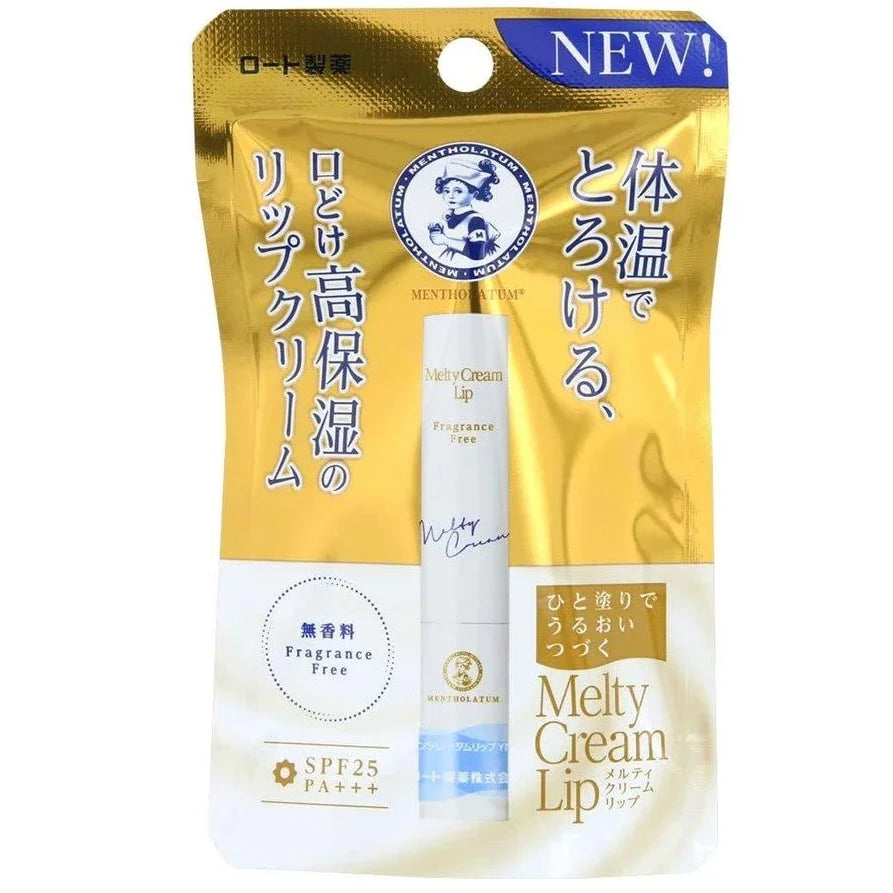
1. Mentholatum Melty Cream Lip (メンソレータム メルティクリームリップ)
Brand: Rohto Pharmaceutical (ロート製薬) Price: ¥495 ($3.30) @cosme reviews: 8,700+ Rating: 5.4/7.0 Key ingredients: Multi-ceramide blend, shea butter, hyaluronic acid
Melty Cream Lip is Japan's best-selling lip balm — period. Rohto Pharmaceutical sells over 10 million units annually (ロート製薬決算資料, 2024). At ¥495, it costs less than a convenience store onigiri.
What makes it special is the texture. The name "melty" isn't marketing — the balm literally melts at lip temperature (37°C体温で溶ける処方), creating a seamless film without the waxy drag of conventional lip balms. Rohto achieved this through their "モイストバンク技術" (moisture bank technology), a proprietary blend that creates micro-reservoirs of moisture within the balm matrix.
What reviewers say: A 20-something user: "I've tried lip balms that cost ¥3,000+. This ¥495 product is better than all of them. It melts instantly and my lips stay soft for hours. I keep three in rotation — bag, desk, nightstand."
The product comes in unscented, honey, and several seasonal limited flavors. @cosme's lip care category sees Melty Cream Lip variants appear in the top 10 simultaneously.
2. Curél Lip Care Cream (キュレル リップケア クリーム)
Brand: Kao (花王) Price: ¥935 ($6.20) @cosme reviews: 3,100+ Classification: 医薬部外品 (quasi-drug) Key ingredient: Ceramide-function ingredient (セラミド機能成分)
Curél brings its ceramide expertise to lip care. This is the same brand we cover extensively in our Curél vs Minon vs d program comparison, and their lip product follows the same philosophy — restore the skin barrier using synthetic ceramides rather than just coating the surface with wax.
As a 医薬部外品, Curél Lip Care Cream contains active ingredients that qualify it for specific claims: "唇の荒れを防ぐ" (prevents lip roughness). This isn't vague marketing — it passed regulatory review.
Key detail: Japanese consumers with atopic dermatitis frequently report lip sensitivity to conventional balms. Curél's fragrance-free, low-irritation formula has a dedicated following among 敏感肌 (sensitive skin) users, with @cosme reviews specifically tagged under the sensitive skin filter.
3. Dior Addict Lip Maximizer (ディオール アディクト リップ マキシマイザー)
Brand: Dior (パルファン・クリスチャン・ディオール) Price: ¥4,620 ($30.80) @cosme reviews: 14,800+ Rating: 5.6/7.0
Dior's Lip Maximizer dominates a different segment — the "lip plumper + gloss + treatment" hybrid. With 14,800+ reviews, it's one of the most-reviewed products in @cosme's entire lip category. Japanese consumers use it as both a finishing lip product and an overnight lip treatment.
The collagen and hyaluronic acid-infused formula creates a tingling plumping effect. What's distinctive about the Japanese market reception is that reviewers evaluate it primarily as skincare, not cosmetics. Reviews discuss "唇の状態が良くなった" (lip condition improved) more than color payoff.
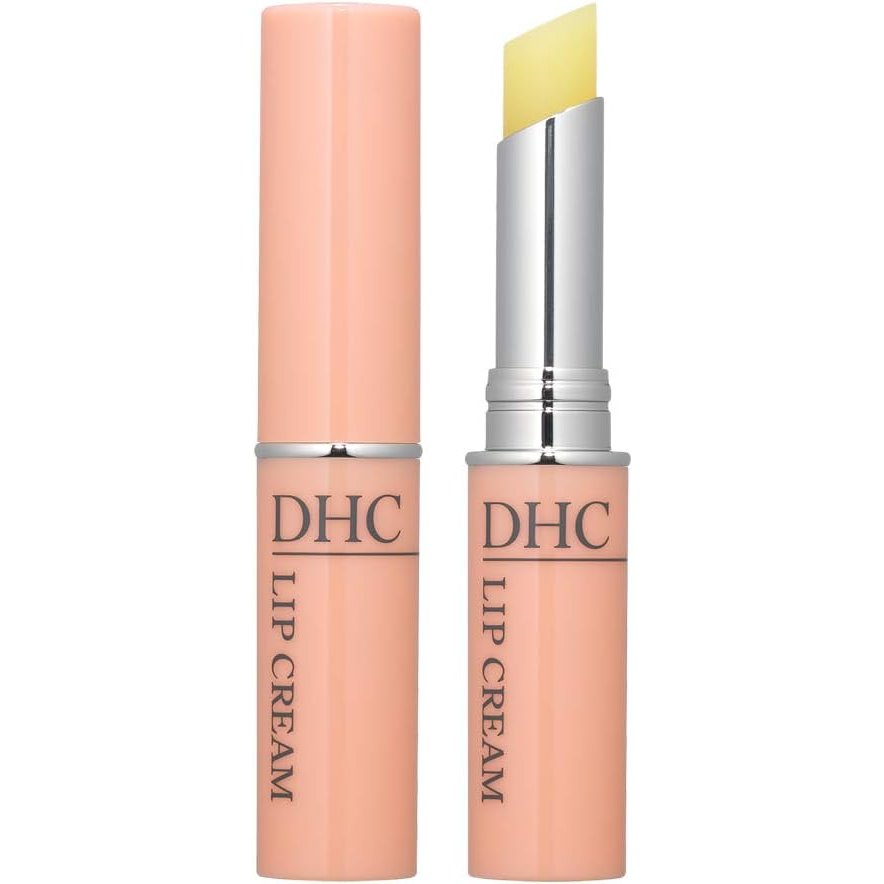
4. DHC Lip Cream (DHC 薬用リップクリーム)
Brand: DHC (ディーエイチシー) Price: ¥770 ($5.10) @cosme reviews: 7,200+ Classification: 医薬部外品 Key ingredients: Olive oil, aloe, vitamin E, licorice derivative
DHC's lip cream is the other perennial bestseller. It's been a top @cosme lip product for over 15 years — a longevity that few beauty products in any category can match. The olive oil-based formula is DHC's signature (the company started as an olive oil importer).
Interesting data point: DHC reports selling one DHC Lip Cream every 3 seconds in Japan (DHC公式サイト, 2024). That's roughly 10.5 million units per year from a single SKU.
5. Moilip (モアリップ N)
Brand: Shiseido (資生堂) Price: ¥1,210 ($8.10) for 8g Classification: 第3類医薬品 (Category 3 OTC drug) Key ingredients: Allantoin, vitamin E, vitamin B6, glycyrrhetinic acid
Moilip operates at a higher regulatory tier than quasi-drugs. It's classified as an actual over-the-counter drug (第3類医薬品), giving it the strongest efficacy claims of any Japanese lip product. Pharmacists stock it behind the consultation counter at many drugstores.
The formula targets chronic lip roughness, angular cheilitis (口角炎), and lip inflammation. It's prescribed-strength treatment in a consumer package. No US lip product occupies this regulatory position because the FDA doesn't create drug classifications for lip treatment.
What reviewers say: A 40-something user: "When my lips crack badly in winter, nothing else works. Moilip heals them in two days. It's medicine, not cosmetics."
Night Lip Treatments: Japan's Secret Category
Source: Japanese Taste
Japan has an entire subcategory of overnight lip treatments (寝る前リップ) that barely exists in the West.
Laneige Lip Sleeping Mask (ラネージュ リップスリーピングマスク)
Price: ¥2,365 ($15.80) @cosme reviews: 5,900+
Yes, Laneige is Korean. But its lip mask has been adopted enthusiastically by Japanese consumers, earning a permanent spot in @cosme's lip care rankings. The berry-flavored overnight balm is applied thickly before bed and wiped off in the morning.
Country & Stream Honey Full Lip (カントリー&ストリーム ハニーフルリップ)
Brand: Ignis (井田ラボラトリーズ) Price: ¥880 ($5.90) @cosme reviews: 2,400+
A Japanese alternative to Laneige. The honey-based formula creates a thick, glossy film. Japanese reviewers compare the two products extensively — the consensus on @cosme leans toward Country & Stream for richer moisture and Laneige for lighter texture.
Lip Scrubs and Lip Masks: The Full Routine
Lush Lip Scrub (ラッシュ リップスクラブ)
Price: ¥1,300 ($8.70) for 25g @cosme reviews: 4,500+
Lush's sugar-based lip scrubs are a permanent @cosme fixture. Japanese users incorporate them 1-2 times weekly as the exfoliation step before lip treatment — the same layering philosophy that governs Japanese face care. The edible sugar base makes them comfortable to use without worry about ingestion.
Choosy Lip Pack (チューシー リップパック)
Brand: Pure Smile Price: ¥165 per sheet ($1.10) @cosme reviews: 2,800+
Hydrogel lip-shaped sheet masks. Applied for 5-15 minutes, they deliver concentrated serum to the lip area. At ¥165 per sheet, Japanese consumers use them as weekly treatments or before special occasions. The concept — a sheet mask specifically for lips — is almost unknown in Western markets.
Tinted Lip Treatments: Where Care Meets Color
Photo by Pexels on Pixabay
Japan's lip care market doesn't separate "treatment" from "color" the way the West does. Tinted lip balms in Japan are formulated as skincare first, color second.
Mentholatum Lip Baby Crayon (メンソレータム リップベビー クレヨン)
Brand: Rohto Pharmaceutical Price: ¥770 ($5.10) @cosme reviews: 3,200+
A crayon-format tinted lip balm with SPF20 PA++. The color payoff is sheer — designed to enhance natural lip color while providing sun protection and moisturizing. Japanese consumers use these for "すっぴんメイク" (no-makeup makeup) days.
Nivea Rich Care & Color Lip (ニベア リッチケア&カラーリップ)
Brand: Nivea Japan (Beiersdorf) Price: ¥638 ($4.25) @cosme reviews: 3,800+
Nivea's Japan-exclusive tinted lip balm line. The "Rich Care" formula uses macadamia nut oil and avocado oil as the base, with light tints available in 8 shades. Japanese reviewers explicitly compare it to luxury tinted lip balms at 5-10x the price, and the consensus is that Nivea's version performs comparably for daily wear.
SPF Lip Care: Japan's Non-Negotiable
Japanese lip care products frequently include UV protection — a feature that's optional at best in Western lip balms.
According to a survey by Rohto Pharmaceutical, 67% of Japanese women consider SPF a "必須" (essential) feature in lip balm (ロート製薬リサーチ, 2024). Compare this to the US, where SPF lip balms exist but represent a small fraction of the market.
Notable SPF lip products:
- Mentholatum Melty Cream Lip: SPF25 PA+++
- Biore UV Lip: SPF30 PA++ — from the same brand behind Japan's top sunscreens (see our Biore UV review)
- Shiseido Water in Lip: SPF18 PA+ — the lightest-feeling SPF lip balm in the rankings
The UV lip protection category in Japan reflects a broader cultural commitment to sun protection that extends to every exposed skin surface.
The Japanese Lip Care Routine
Daily Routine
- Morning: SPF lip balm (Mentholatum Melty Cream Lip or equivalent)
- Midday: Reapply tinted SPF lip treatment (Lip Baby Crayon)
- Evening: Remove lip product with gentle cleanser
- Night: Apply overnight lip treatment (Country & Stream Honey Full Lip or Laneige)
Weekly Treatment
- Lip scrub (1-2x per week): Lush or sugar-based exfoliant
- Lip mask (1x per week): Choosy Lip Pack or hydrogel lip sheet
- Heavy lip treatment: Moilip or Curél for repair if needed
Seasonal Adjustments
- Winter: Switch to heavier balms (DHC, Moilip), increase overnight treatment frequency
- Summer: Prioritize SPF lip products, use lighter gel-type balms
- Humid season (梅雨): Light, non-sticky formulas that don't slide in humidity
Frequently Asked Questions
Why are Japanese lip balms so much cheaper than Western ones? Japan's drugstore beauty market is intensely competitive. Rohto, Kao, DHC, and Shiseido all compete at the ¥500-1,000 ($3.30-$6.70) price point with medicated formulations. The competition keeps prices low while ingredient quality stays high. A ¥495 Melty Cream Lip contains ceramides, hyaluronic acid, and shea butter — ingredients that would push a Western lip balm into the $15-25 range.
What does 医薬部外品 mean on Japanese lip products? It means "quasi-drug" — a regulatory classification between cosmetics and OTC drugs. Products must contain specific active ingredients at regulated concentrations and pass efficacy testing to earn this label. When you see 薬用 (medicated) on a Japanese lip balm, it's not marketing — it's a legal claim backed by ingredient testing. US lip balms have no equivalent classification.
Are Japanese lip balms safe to use daily? Yes. Japanese cosmetics and quasi-drugs undergo rigorous safety testing under MHLW (厚生労働省) regulations. Japan's cosmetic safety standards are among the strictest globally — the list of banned ingredients in Japan exceeds 1,300 substances, compared to the FDA's roughly 11 banned cosmetic ingredients. Daily use of Japanese lip products is standard practice.
Can I find Japanese lip products outside Japan? The major ones — DHC Lip Cream, Mentholatum Melty Cream Lip, and Curél Lip Care — are available on Amazon Japan (international shipping), Dokodemo, and Yesstyle. Prices are typically 30-50% higher than Japanese retail. For the best selection and prices, purchasing during a Japan trip or through a Japanese forwarding service is most cost-effective.
What's the difference between a lip essence and a lip cream in Japan? A lip essence (リップ美容液) is a thinner, serum-like formulation designed to deliver active ingredients to lip skin. A lip cream (リップクリーム) is thicker, with more occlusive ingredients to seal in moisture. Japanese consumers often layer both — essence first for treatment, cream second for protection. This layering mirrors the face skincare approach detailed in our Japanese skincare layering guide.
Related Reading
- Curél vs Minon vs d program Sensitive Skin Comparison — Curél's lip care shares the same ceramide philosophy
- Anessa vs Biore vs Skin Aqua Comparison — UV protection extends to lip products from these brands
- Japanese Skincare Layering Order Complete Guide — the layering principle that applies to lip care too
— The J-Beauty Decoded Team